
Well Barriers and well barrier elements are specifically...
NORSOK D-010 defines Well Integrity as “The application of technical, operational and organizational solutions to reduce risk of uncontrolled release of formation fluids throughout the life cycle of a well”. It can be further expanded as follows:
‘Well Integrity’ is essentially a crucial component in the construction of oil and gas wells that demands highest priority to achieve design, technical, structural, operational and organizational integrity to minimize the risk of uncontrolled release of formation fluids during all activities of well construction from the ‘Concept’ stage until the well is safely abandoned and secured after its production life”.
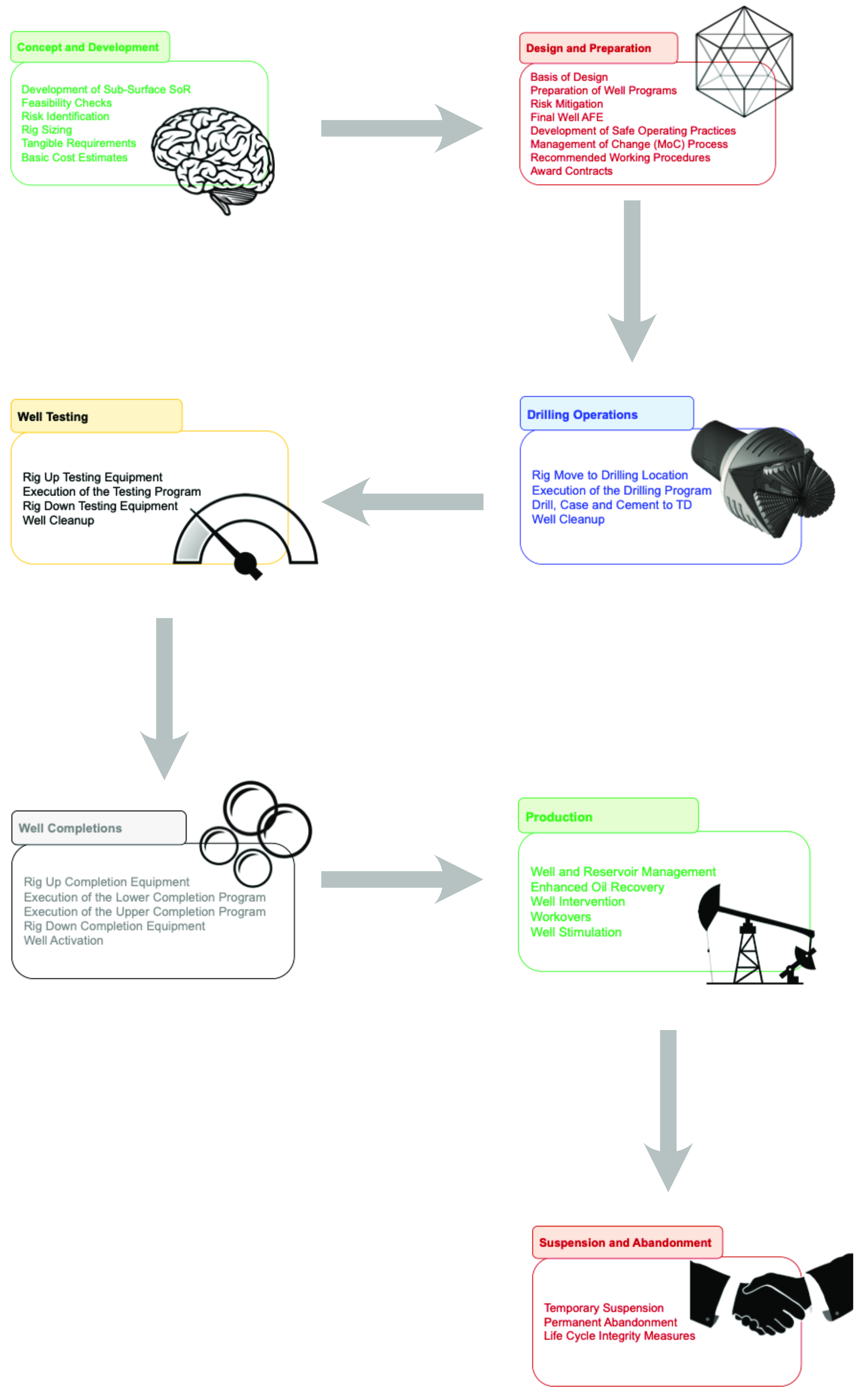
Although wells differ widely in their type and their intended short term and long-term objectives, the life cycle of every well begins at the ‘Concept Development’ stage and ends when the well is permanently plugged and abandoned.
The figure sequence below illustrates the general life cycle of an oil and gas well.
The establishment of life cycle well integrity requires not just physical barrier elements installed and verified in the wellbore but also adherence to safe operating practices, policies and procedures for all well operations, compliance to international and regional regulations, adequate personnel competency and awareness, reporting and documentation discipline, a robust well barrier management system and more.
Vignesh is a Petroleum Engineer with more than 10 years of experience in Well Integrity and Well Engineering. He is the founder of iDrilling Technologies and is actively consulting Oil Operators on Well Integrity and Risk Aversion solutions.
All author posts
Well Barriers and well barrier elements are specifically...
When a well is constructed section by section, during any...